Homeowner limits
Observe only from outside closed electrical equipment. Do not remove the panel cover, touch wiring, replace breakers, or work on service conductors. Parts of a panel can remain energized even with the main breaker off. Use a licensed electrical contractor for diagnosis and installation, with permits, inspection, and utility coordination as required. Smoke, arcing, or fire calls for leaving the area and calling 911, not repeatedly resetting a breaker.
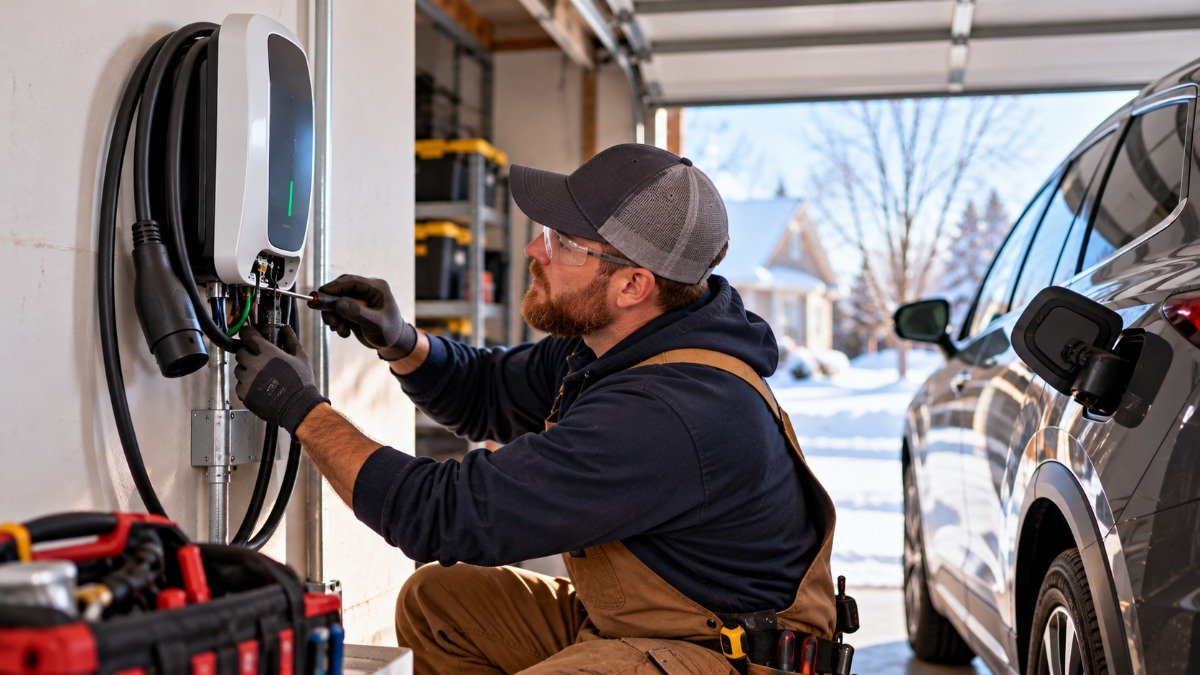
As electric vehicles become more popular in Michigan, many homeowners are looking to install Level 2 EV chargers at home. Here's everything you need to know about the process.
Level 1 vs. Level 2 Charging
- Level 1 (120V): Uses a suitable grounded receptacle and compatible listed charging equipment. Charging speed depends on the vehicle and available power; it may meet modest daily driving needs. Have the circuit and receptacle checked, and do not use extension cords or improvised adapters
- Level 2 (240V): Uses a properly designed charging circuit and compatible equipment. It can charge faster than Level 1, but actual speed depends on the vehicle's onboard charger, equipment settings, power, battery temperature, and state of charge. Do not assume an existing dryer circuit is suitable
Electrical Requirements
A licensed electrician should determine:
- Available service and panel capacity using a load calculation, not the panel's label alone
- Circuit rating, conductor type and size, protection, and connection method for the listed equipment and its continuous load
- Required permits, inspection, weather protection, and manufacturer-specified installation details
- Whether suitable load management can meet charging needs without increasing service capacity
Do not use a generic wire-size or breaker-size recommendation as installation instructions.
Do You Need a Panel Upgrade?
Neither 100-amp nor 200-amp service alone answers that question. The existing and proposed loads, equipment condition, charging rate, and suitable load-management options determine what is needed. Our electricians assess this during every EV charger consultation.
Installation Process
1. We evaluate your electrical panel capacity and charger placement options
2. We provide an upfront quote covering all materials and labor
3. We pull necessary permits with your local municipality
4. We install the dedicated circuit, outlet or hardwired connection, and charger
5. Final inspection ensures everything meets electrical code
Choosing a Charger
We recommend UL-listed chargers from reputable brands. Key features to consider:
- Charging power compatible with your vehicle, daily mileage, and assessed electrical capacity
- WiFi connectivity for monitoring and scheduling
- An enclosure and equipment listing suitable for the actual outdoor location, temperatures, and manufacturer's installation requirements
- Smart charging features for off-peak electricity rates
Cost Estimate
Request a dated, itemized quote for the chosen equipment, wiring route, circuit work, permits, inspection, and any assessed service changes. Installation costs vary substantially; a generic Michigan price range is not a quote for your home.
Michigan Incentives
Check with your local utility, DTE and Consumers Energy occasionally offer rebates or time-of-use rates that make off-peak EV charging more affordable.
Doty Service Network's licensed electricians install EV chargers throughout the Lansing and Vassar service areas. Contact us for a free assessment.
Sources and scope
These references support the technical guidance, not a quote, a guaranteed outcome, or every product's features. Follow the equipment manufacturer's instructions and confirm applicable local requirements.
- U.S. Department of Energy, Alternative Fuels Data Center, Charging Electric Vehicles at Home
- Michigan LARA, Electrical Permit Information (confirm requirements with the local enforcing authority)