Homeowner limits
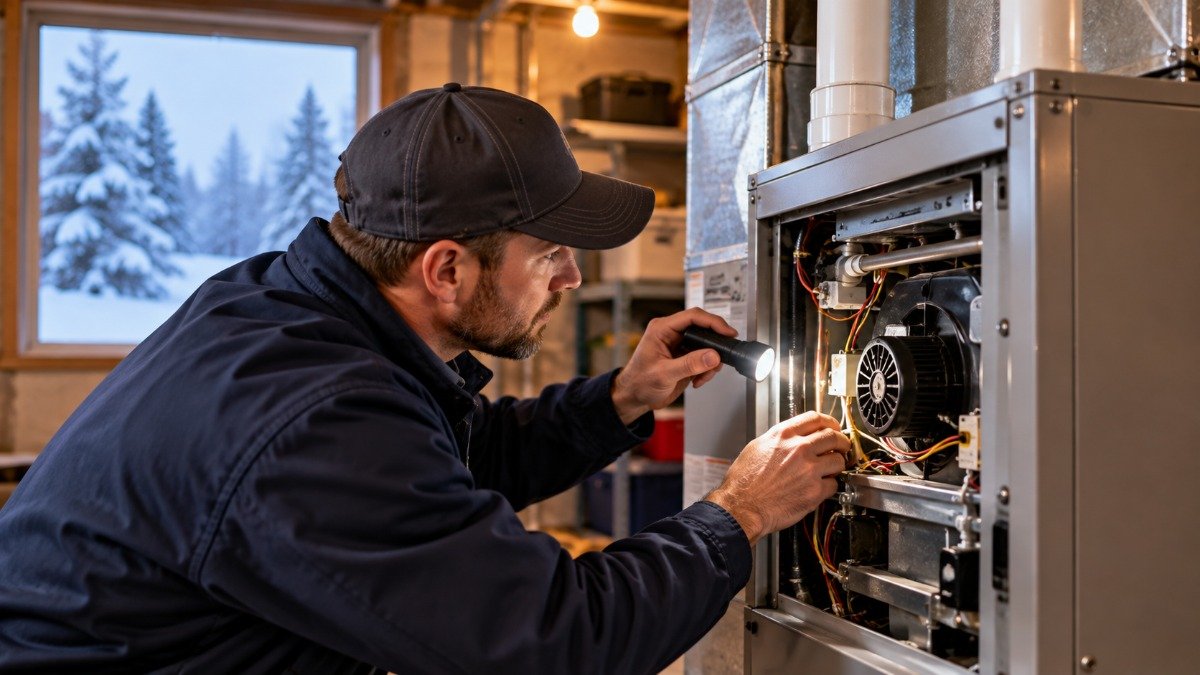
Use only the routine maintenance procedures in your owner's manual. Turn the system off as directed before replacing an accessible filter; do not remove burner or electrical service covers. Leave gas valves, burners, ignition parts, heat exchangers, safety switches, and flue repairs to qualified HVAC professionals. Do not bypass a safety control. Do not attach refrigerant gauges, open refrigerant lines, or add refrigerant; this is work for an appropriately EPA Section 608-certified technician.
Safety first
If a carbon monoxide alarm sounds or anyone has symptoms of CO poisoning, get everyone outside immediately and call 911 from fresh air. If you smell or hear leaking gas, leave without operating switches, flames, or phones inside; call the gas utility's emergency line from outside. Do not wait for a routine service appointment or re-enter until responders say it is safe.
Michigan winters are no joke. With temperatures regularly dropping below zero and wind chills making it feel even colder, your furnace is the most critical system in your home from November through March. Here's how to make sure it's ready.
Step 1: Replace Your Air Filter
This is useful routine maintenance when performed according to your owner's manual. A dirty filter restricts airflow, forces your furnace to work harder, and can lead to overheating and premature failure. Check it before heating season and at the interval specified by the manufacturer; replace or clean it as directed.
Step 2: Test Your Thermostat
Turn your thermostat to heat mode and set it a few degrees above room temperature. Startup timing varies by equipment and control settings. Check user-replaceable thermostat batteries if applicable, but do not repeatedly reset a furnace lockout. If it does not operate normally, arrange qualified service.
Step 3: Check Your Vents and Registers
Walk through every room and make sure all supply and return vents are open and unblocked by furniture, rugs, or curtains. Blocked vents cause uneven heating and strain your system.
Step 4: Inspect Your Flue and Exhaust
From a safe ground-level location, visually check exterior intake and exhaust openings for obstruction. Only clear loose snow around an accessible opening if the manufacturer's instructions permit it; do not insert tools, dismantle a flue, chip attached ice, or climb onto a roof. A blocked or damaged vent can cause CO exposure: stop using the equipment and call a qualified HVAC professional. A CO alarm or suspected gas leak requires the emergency action described above.
Step 5: Test Your Carbon Monoxide Detectors
Install CO alarms on every level and outside sleeping areas, following their instructions. CPSC recommends testing CO and smoke alarms monthly. Replace batteries and expired alarms as directed; a test button checks the alarm, not the furnace's combustion safety.
Step 6: Schedule a Professional Tune-Up
A professional furnace tune-up includes cleaning the burner assembly, checking the heat exchanger for cracks, testing safety controls, measuring combustion efficiency, and lubricating moving parts. This annual service catches problems before they become expensive emergencies.
Step 7: Check Your Emergency Plan
Know who to call if your furnace fails on a -10°F night. Doty Service Network offers emergency heating service in the Lansing and Vassar areas. Keep our number handy: (517) 327-7777 (Lansing) or (989) 455-1305 (Vassar).
When to Consider Replacement
Replacement savings depend on the equipment being replaced, correct sizing, duct condition, fuel prices, and how the house is used. AFUE (Annual Fuel Utilization Efficiency) compares useful furnace heat with fuel input; it is not a whole-home utility-bill savings percentage.
Illustrative calculation, not a Michigan forecast: changing from 80% AFUE to 96% AFUE would use about 17% less heating fuel for the same useful heat (1 - 0.80 / 0.96). This assumes the same fuel, heating load, and operating conditions, and excludes duct losses, electricity, and fixed utility charges. Actual savings for a Lansing or Vassar home need an assessment using its equipment, weather, and bills. Age or an efficiency rating alone does not make replacement necessary.
Sources and scope
These references support the technical guidance, not a quote, a guaranteed outcome, or every product's features. Follow the equipment manufacturer's instructions and confirm applicable local requirements.
- U.S. Department of Energy, Guide to Home Heating and Cooling (legacy reference for AFUE and sizing concepts, not current equipment standards or prices)
- U.S. EPA, Section 608 Technician Certification Requirements (updated July 15, 2026)
- U.S. Consumer Product Safety Commission, Winter Storm CO and Fire Safety (2026)