Homeowner limits
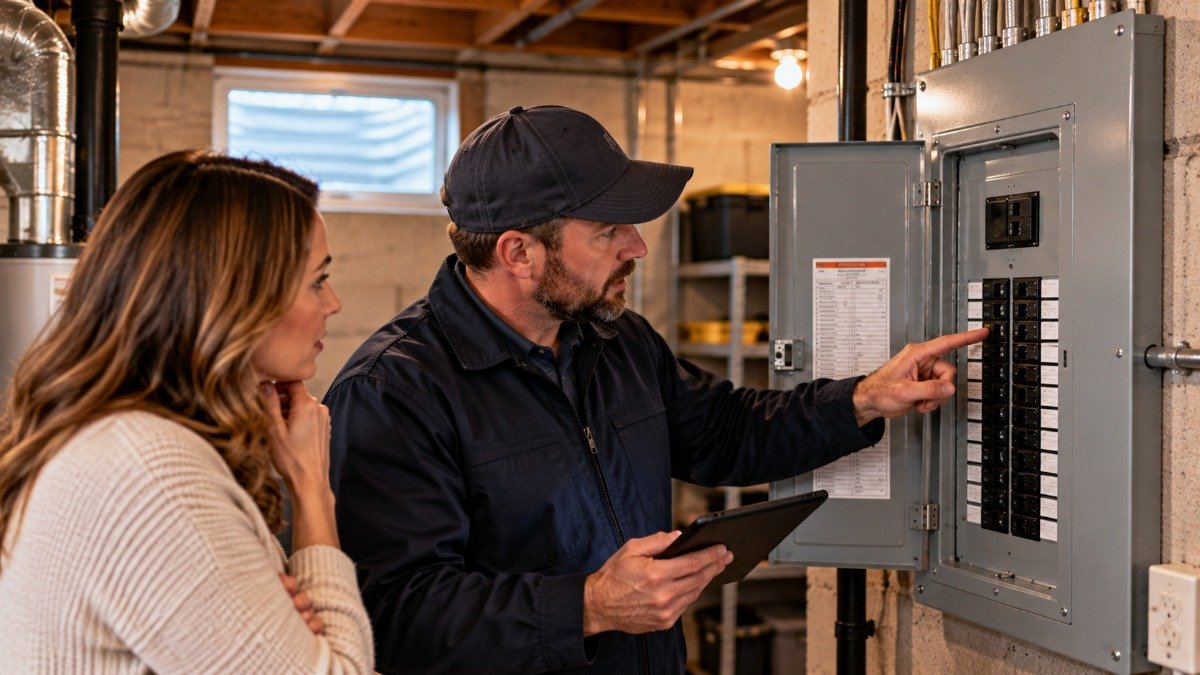
Observe only from outside closed electrical equipment. Do not remove the panel cover, touch wiring, replace breakers, or work on service conductors. Parts of a panel can remain energized even with the main breaker off. Use a licensed electrical contractor for diagnosis and installation, with permits, inspection, and utility coordination as required. Smoke, arcing, or fire calls for leaving the area and calling 911, not repeatedly resetting a breaker.
Your electrical panel is the heart of your home's electrical system. It distributes power to every circuit in your house. But many Michigan homes, especially those built before 1990, have panels that weren't designed for today's electrical demands.
Warning Signs That Need Professional Assessment
1. Frequently Tripping Breakers: Repeated trips can indicate overload, a short circuit, a ground fault, or faulty equipment; they do not by themselves prove you need a larger panel. Stop repeatedly resetting the breaker and arrange diagnosis.
2. Fuse Box Instead of Breakers: A fuse box warrants evaluation of condition, correct fuse ratings, and available protection. Its presence alone does not establish the cause of a problem or justify installing larger fuses.
3. 100-Amp Service or Less: Service size alone does not determine adequacy. Have an electrician perform a load calculation and assess possible load management before recommending larger service.
4. Planning Major Additions: New equipment requires an assessment of the proposed load, existing capacity, wiring, and suitable control options; it does not automatically require a service upgrade.
5. Flickering or Dimming Lights: Dimming can have several causes, including loose connections or utility-supply problems; an electrician should diagnose the cause rather than assume a panel upgrade is the solution.
6. Warm or Discolored Panel: Heat at your panel is a serious safety concern that requires immediate attention.
7. Rust or Corrosion: Moisture damage compromises your panel's safety and function.
8. Home Insurance Requirements: Ask your insurer for its current requirements. If you suspect an older Federal Pacific or Zinsco panel, arrange professional identification and condition assessment without removing its cover.
What Does a Panel Upgrade Involve?
A professionally designed upgrade may include the following. This is a scope overview, not DIY instructions; the required service size is established by assessment:
- Removing the old panel and breakers
- Installing appropriately rated service and panel equipment with required protection
- Upgrading the meter base if needed
- Re-routing and organizing circuits
- Adding arc-fault (AFCI) and ground-fault (GFCI) protection where required by code
- Inspection by the applicable electrical enforcing authority
Cost and Timeline
Request a dated, itemized quote covering the assessed scope, service size, grounding and bonding, meter or utility work, permits, inspection, and outage arrangements. Costs and completion times vary; inspection and utility scheduling can extend the calendar timeline beyond the installation work. Doty Service Network provides upfront pricing and handles the permitting and inspection process.
Michigan-Specific Considerations
Confirm the applicable permit and inspection process with your local enforcing authority. Michigan allows certain owner-occupant permit applications, but that is not a recommendation to perform panel work yourself. Use a licensed electrical contractor for assessment and service changes; do not conclude from the home's age alone that a particular panel is installed or needs replacement.
Contact Doty for a free electrical panel assessment. Our licensed electricians will evaluate your current system and give you an honest recommendation.
Sources and scope
These references support the technical guidance, not a quote, a guaranteed outcome, or every product's features. Follow the equipment manufacturer's instructions and confirm applicable local requirements.
- Michigan LARA, Electrical Permit Information (confirm requirements with the local enforcing authority)
- U.S. Department of Energy, Alternative Fuels Data Center, Charging Electric Vehicles at Home